GM Web Resources
We are part of a large team made up of designers, developers, marketers, researchers, analysts, and strategists.
Sharing information is essential to what we do.
Have a question?
We’re here whenever you need us.

Website Hosting Explained: A Beginner’s Guide for Business Owners
Website hosting is one of the most important parts of keeping a business website online, but the terminology can be confusing if you do not work with websites every day. Hosting affects how your website loads, how reliable it is, how much traffic it can handle, and how securely your data is stored.
Understanding the basics can make it easier to compare hosting providers and choose a setup that fits your website’s needs. This guide breaks down how website hosting works, the most common hosting types, what hosting typically includes, and what business owners should look for in a provider.
What is Website Hosting?
Website hosting is explained as a cloud service in which a service provider stores all the files that make up a website on a server and makes the website accessible to the internet. These servers can be physical or virtual, and they store resources needed to build and run a website.
How Website Hosting Works
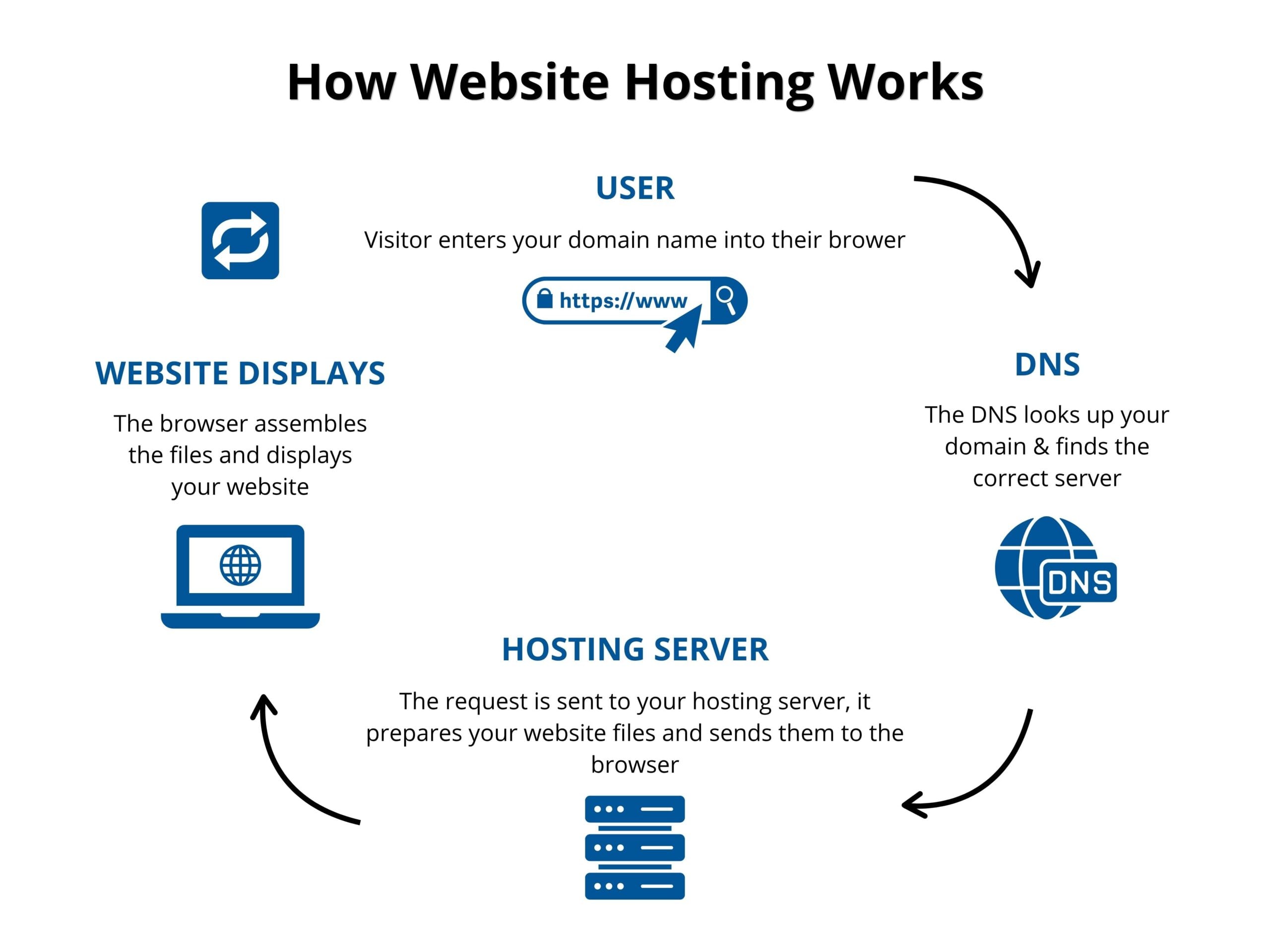
Website hosting providers create space on a server or provide a dedicated server to store a website’s files and content. When someone enters your domain name into a browser, the domain connects to the server where your website is hosted, and the server sends the necessary files to display the webpage.
The hosting server is what makes your website available online to visitors and search engines. The speed and reliability of that server can also affect how quickly your website loads and how consistently it stays online.
Website Hosting vs. Domain Name
A domain name is a customizable web address that enables users to find websites without having to remember long numerical codes known as an internet protocol (IP) address. Website hosting is the server that holds your websites content and connects it to the internet.
The domain name is still important as it’s what communicates the IP address to search engines. The DNS or domain name system is what converts the domain name into the IP address.
Common Types of Website Hosting
The right type of hosting depends on your website’s traffic, performance needs, budget, and how much technical control you want.
What Does Website Hosting Include?
Website hosting providers typically offer scalable storage, bandwidth, security protocols, backups, and other technical support. Occasionally, internet service providers (ISP) or website hosting providers will also offer DNS registration and access to the content distribution network (CDN).
Why Hosting Matters for Website Performance
Hosting can affect server response time, uptime, and load speed, which can influence performance and SEO. Storage is the biggest factor with load speeds, as your CPU, bandwidth, and RAM determine how many users can be on your website simultaneously before performance slows. SSD storage processes reading/writing operations exponentially faster than traditional hard drives.
A CDN reduces the distance between users and cached website content by serving it from geographically distributed servers. Your core web vitals are used by Google to index your website content, the LCP (largest contentful paint) which is how long it takes the largest file to load on your website. LCP starts with the server response time, which can delay your load speed, but fast servers respond in under 200 milliseconds.
Website Hosting and Security
A secure website hosting provider offers web application firewalls (WAF), firewalls for server access, encryption with SSL certificate for sensitive data, and prevention of DDoS attacks. It’s also common for website hosting providers to include backups and disaster recovery in case of a cyberattack, as well as controlling passwords and user access. Available security features will vary by provider and plan, so be sure to confirm exactly what’s included.

How Much Does Website Hosting Cost?
The cost of your website hosting will vary by provider but here are some common things that will affect cost.
What Should a Business Look for in a Hosting Provider?
Businesses should look for a few different things when deciding on a hosting provider including the company’s speed and uptime, how much storage and bandwidth is available, and if the SSL certificate is included. Additionally, it’s common to look for included backups and security facilities, control panel availability, and if the domain name is included in the cost.
Should You Manage Hosting Yourself or Use a Website Company?
Managing website hosting yourself involves running your own server to host services, applications and websites instead of relying on third-party providers. While it gives you full control, data privacy and complete customization it also requires technical expertise for software development, maintenance and security management. For many small businesses, this can create more responsibility than expected and may require dedicated in-house support.
Managed website hosting eliminates the need for in-house technical support and offers improved performance and reliability. For many small businesses, this can create more responsibility than expected and may require dedicated in-house support.
For businesses without an internal technical team, managed hosting is often the more practical option because it reduces the time and resources needed to keep the website secure, updated, and running properly.
Choose Hosting That Supports Your Website
The right website hosting should support your site’s performance, security, reliability, and future growth. The best option will depend on factors such as website size, traffic, storage needs, technical requirements, and how much control you want over the hosting environment.
For many small businesses, managed hosting can simplify the process by reducing the technical work required to keep a website secure, updated, and running properly. If you are unsure what type of hosting your website needs, GM Web Services can help evaluate your current setup and provide a hosting solution that supports your business goals.