GM Web Resources
We are part of a large team made up of designers, developers, marketers, researchers, analysts, and strategists.
Sharing information is essential to what we do.
Have a question?
We’re here whenever you need us.

The Website Design Process: What to Expect From Start to Launch
Building a professional website involves much more than choosing colors, adding images, and publishing a few pages. A successful website design process typically includes research, planning, design, content creation, development, testing, launch, and ongoing maintenance. Each step plays an important role in creating a website that looks professional, functions properly, and supports the goals of the business.
While the exact process can vary between designers and agencies, understanding the main stages can help businesses know what to expect when starting a website project. Below, we’ll walk through the typical website design process before explaining how GM Web Services approaches website development in six simple steps.
1. Research & Discovery
The research and discovery step lays the groundwork for the rest of the website design process. The first question you might be asked is what your brand stands for, this might include creating a brand guide and gathering information on your products or services. Having a brand or style guide is important as consistent branding can increase your return on investment (ROI) by 23%. This step also includes identifying your target audience and conducting a competitor analysis.
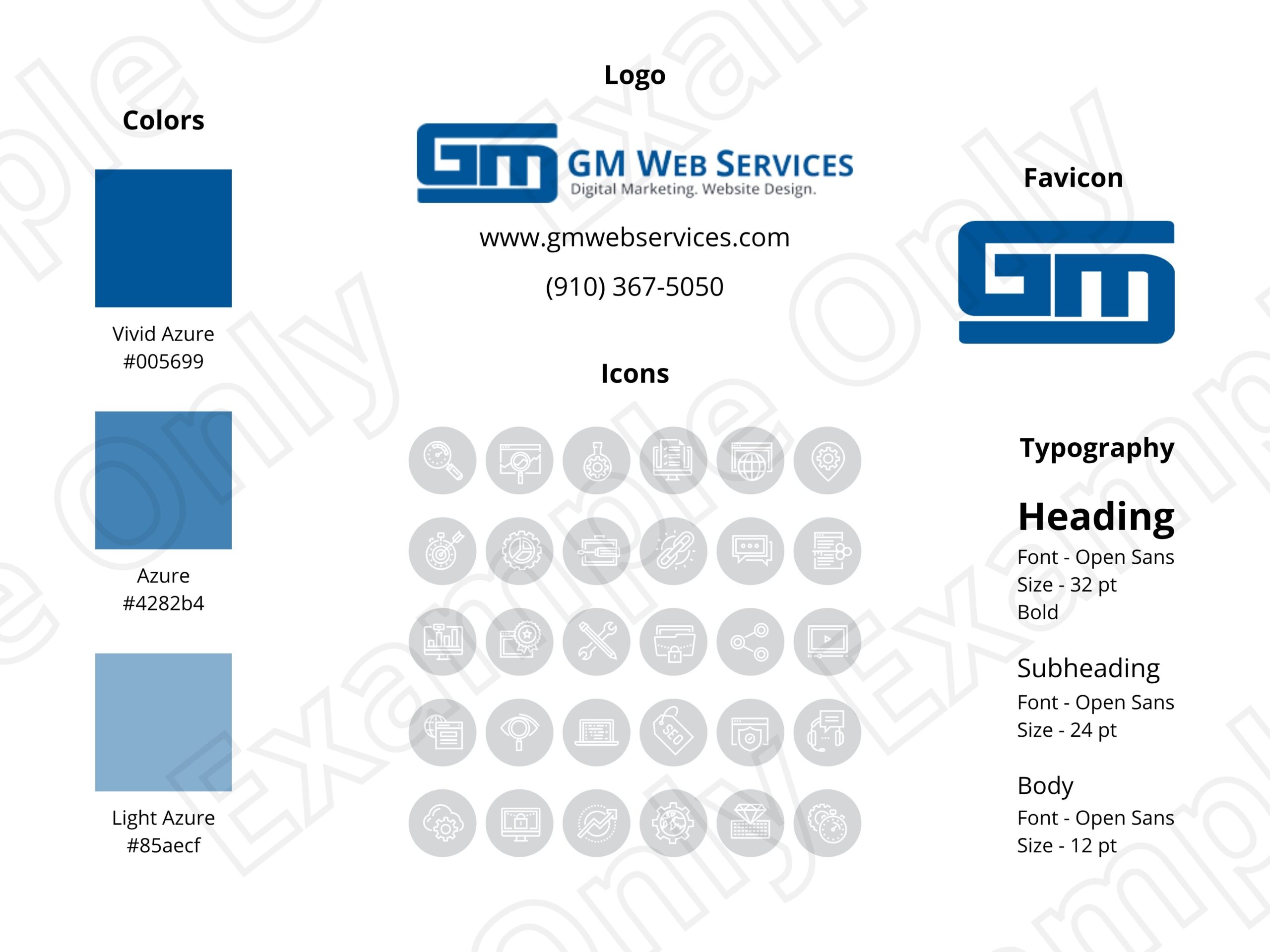
The research and discovery phase also goes over contract basics involving the website design process. This includes selecting a content management system (CMS), what deliverables will be presented, and project timeline.
2. Planning & Strategy
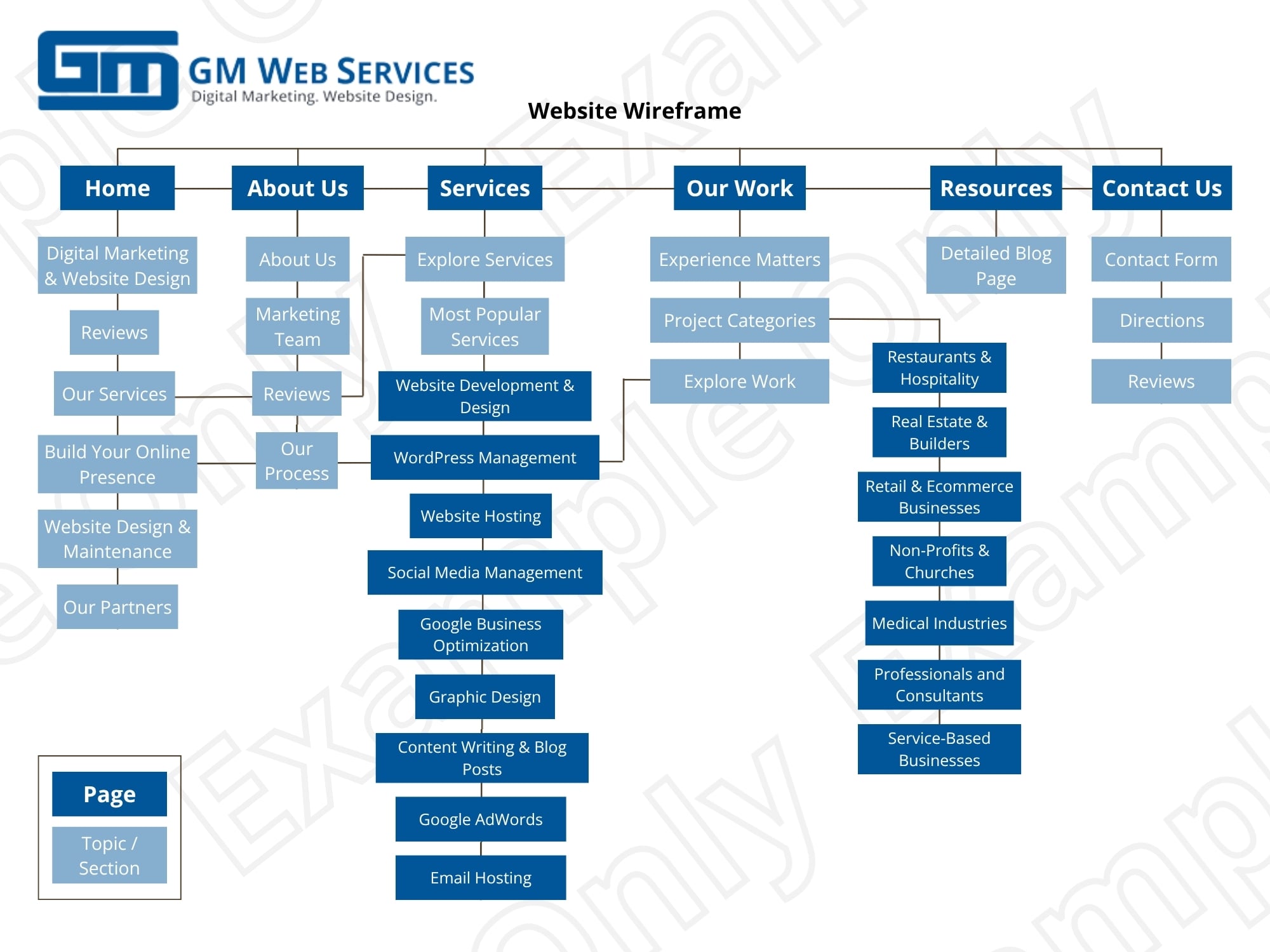
The planning and strategy step involves creating a sitemap, which outlines every page and how they each connect. Along with the sitemap, the information that will go on each page is collected into a content index. Both the sitemap and content index will be based on user research and behavior, which can be collected from past website analytics if available.
3. Wireframes & Mockups
This step of the website design process lays out where design elements will go without the visual distraction of images and logos. This layout is called a wireframe, and it takes the sitemap to the next level. A mockup takes the wireframe and adds the visual elements including colors, fonts, images and brand identity.
4. Design
The design step involves balancing aesthetics with usability. This includes creating website page layouts, color schemes, and design elements such as a header and footer, navigation bar, and logos. These design elements come together to create the user interface (UI), the UI helps create the user experience (UX) which is imperative to keeping visitors on your site. This step also involves making the website responsive for mobile devices and accessible for all users. Accessibility includes alternative text for images, captions for videos, as well as color contrast and font size for readability.
5. Content Integration
This step of the website design process involves more than just inserting images and text. Content integration includes aligning the copy with the design’s visual hierarchy; headings, subheadings, body, and finally a call-to-action (CTA). Integrating content should stay consistent with the style or brand guidelines, images should be optimized for loading speed, and CTAs should fit naturally into each page.
6. Development
In the development step, the website mockups and design are converted into a development site. There is front-end development, which focuses on the client side of the web pages, and back-end development which focuses on the server side of the website. During front-end development the HTML, CSS, and JavaScript are implemented into the code and third-party integrations are added. Back-end development deals with the server including database management, server scripting and API integrations.
7. Quality Assurance/Testing
This phase of the website design process cannot be skipped. Broken links, issues with forms, and slow site speed can quickly cause visitors to bounce. Functionality testing includes confirming forms work, buttons are linked, and interactive elements are functional. Cross-browser testing confirms the website shows its design consistently when accessed from different browsers such as Chrome, Safari, and Firefox. Performance and speed testing is also included in this step, PageSpeed Insights is a great tool to test speed and ensure media files are optimized. The final check in this step is content and visual testing which includes proofreading, checking image placement, and content alignment.
8. Launch & Maintenance
The initial launch may involve resolving any post-launch issues and confirming performance. Post-launch, your website will start gathering user feedback through website analytics, this user behavior will point out any changes that need to be made. Maintenance post-launch includes regular updates to your content, software, and plugins.
The eight steps above represent a general website design process, but agencies may combine or organize these stages differently. At GM Web Services, we streamline the process into six steps.
From Planning to Launch: Building a Website That Works
The website design process is not the same for every business, designer, or agency. Some projects may require additional research, custom development, integrations, or testing, while others may follow a more streamlined approach. Regardless of the process, careful planning, thoughtful design, thorough testing, and ongoing maintenance all contribute to a website that can continue supporting your business after launch.
At GM Web Services, we simplify the website design process by guiding clients from initial planning and research through design, development, launch, and ongoing maintenance. Our goal is to create websites that not only reflect each business’s brand but are also functional, responsive, and built with long-term performance in mind.
Ready to start your website project? Contact GM Web Services to learn more about our website design process and how we can help create a site that supports your business goals.