GM Web Resources
We are part of a large team made up of designers, developers, marketers, researchers, analysts, and strategists.
Sharing information is essential to what we do.
Have a question?
We’re here whenever you need us.
How Does Internal Linking Affect SEO?
Internal links are hyperlinks that connect one page of your website to another page under the same domain.
A strong internal linking structure can help search engines discover pages, understand how your website is organized, and determine which pages are most important. Google specifically recommends making sure important pages can be reached from other findable pages through crawlable links.
Internal linking can also improve the user experience by helping visitors move naturally between related pages, find additional information, and reach important service or conversion pages.
Types of Internal Links
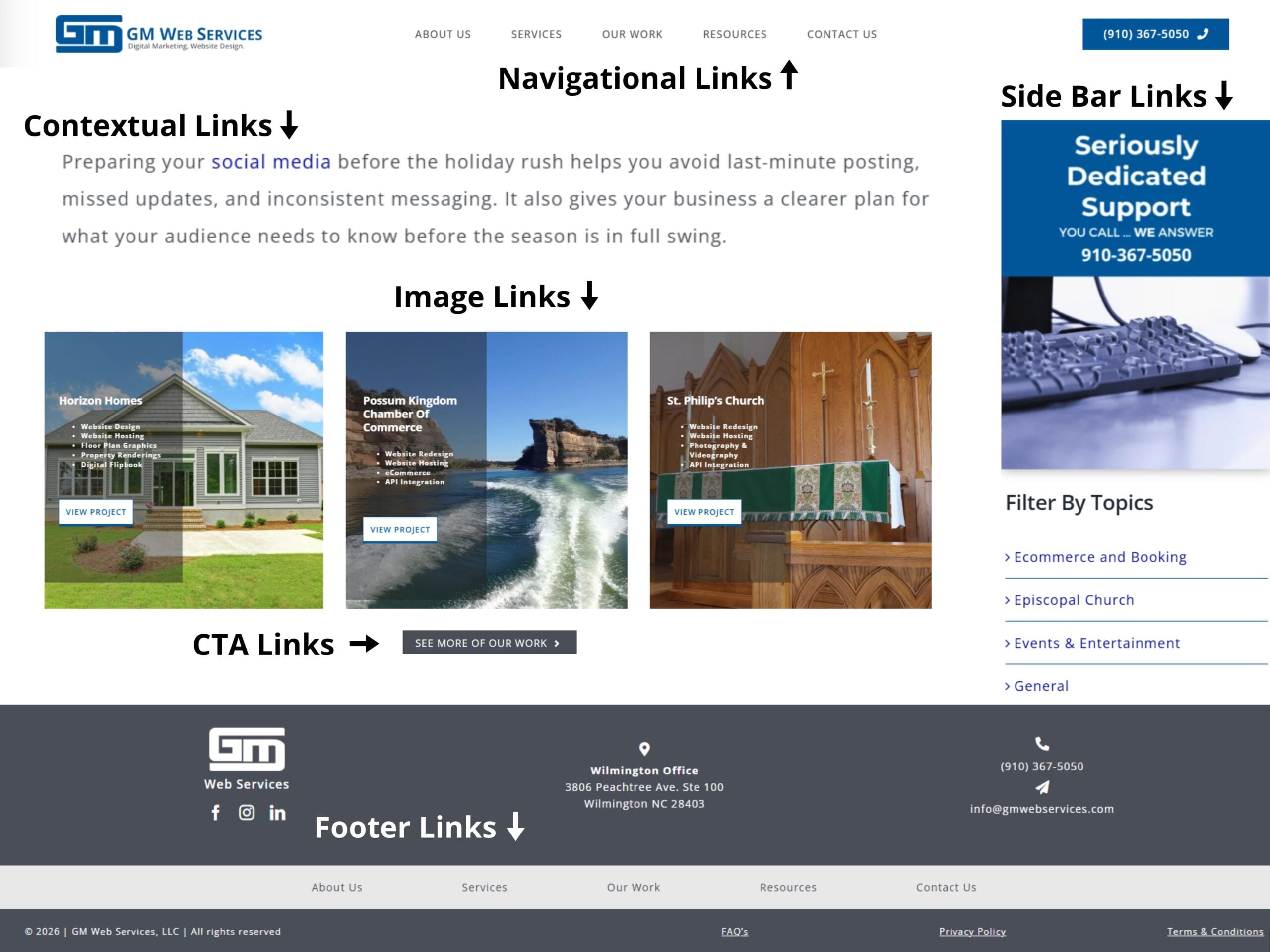
Internal links can appear throughout a website in several different ways:
Internal Linking Helps Search Engines Find Your Pages
If an important page has no internal links pointing to it, search engines may have a harder time discovering it. Pages like this are often referred to as orphan pages.
Google notes that properly linked pages are easier to discover and recommends making sure important pages can be reached through navigation or links from other pages. A sitemap can also help with discovery, but it doesn’t replace a strong internal linking structure.
Internal Links Help Establish Site Structure
Internal links also give search engines more context about how your pages relate to one another.
For example, a main SEO service page may link to supporting blogs about keyword research, technical SEO, internal linking, and content optimization. Those relationships can help establish a clearer topic structure across the site.
Google also looks at site structure when generating features such as sitelinks and recommends linking important pages from other relevant pages using concise, relevant anchor text.
Internal Linking Can Help Distribute Link Equity
Internal links can also help distribute authority across a website.
When a strong or well-linked page points to another relevant page, some SEO value can be passed through that link. This is often referred to as link equity.
That doesn’t mean every page should link to every other page. Links should be relevant and useful. Important service pages, high-value content, and pages you want users to find easily should receive internal links from related pages where they make sense.
Anchor Text Matters
Anchor text is the clickable text used in a link.
Instead of using vague phrases like “click here,” use descriptive anchor text that gives both users and search engines context about the destination page.
For example: “Learn more here.” vs. “Learn more about website design services.”
Google recommends using anchor text that is concise and relevant to the page being linked to. That doesn’t mean every internal link needs to use an exact-match keyword. Natural, descriptive wording is usually the better approach.
Setting Up Your Internal Linking Strategy
A good internal linking strategy should make it easier for both visitors and search engines to understand your website.
Build a Stronger Website Structure
Internal linking may seem like a small part of SEO, but it can have a meaningful impact on how search engines crawl your website and how users move through it.
A thoughtful internal linking strategy helps connect related content, highlight important pages, and create a clearer website structure.
GM Web Services helps businesses improve website structure, content, and SEO with strategies designed around long-term organic visibility. Contact our team to learn how we can help strengthen your website’s SEO.