GM Web Resources
We are part of a large team made up of designers, developers, marketers, researchers, analysts, and strategists.
Sharing information is essential to what we do.
Have a question?
We’re here whenever you need us.

Optimize Your Content for AI-Powered Search
AI-powered search is changing how people find information online, but the fundamentals of good SEO still matter. Google’s AI features, including AI Overviews and AI Mode, still rely on established Search ranking and quality systems, so businesses don’t need a completely separate AI strategy. Instead, the focus should remain on useful content, clear website structure, and strong technical SEO. According to Statista, 33% of Americans rely on AI for online research, with 21% using it for shopping queries, while Forbes reports that half of U.S. mobile users use AI voice search every day.
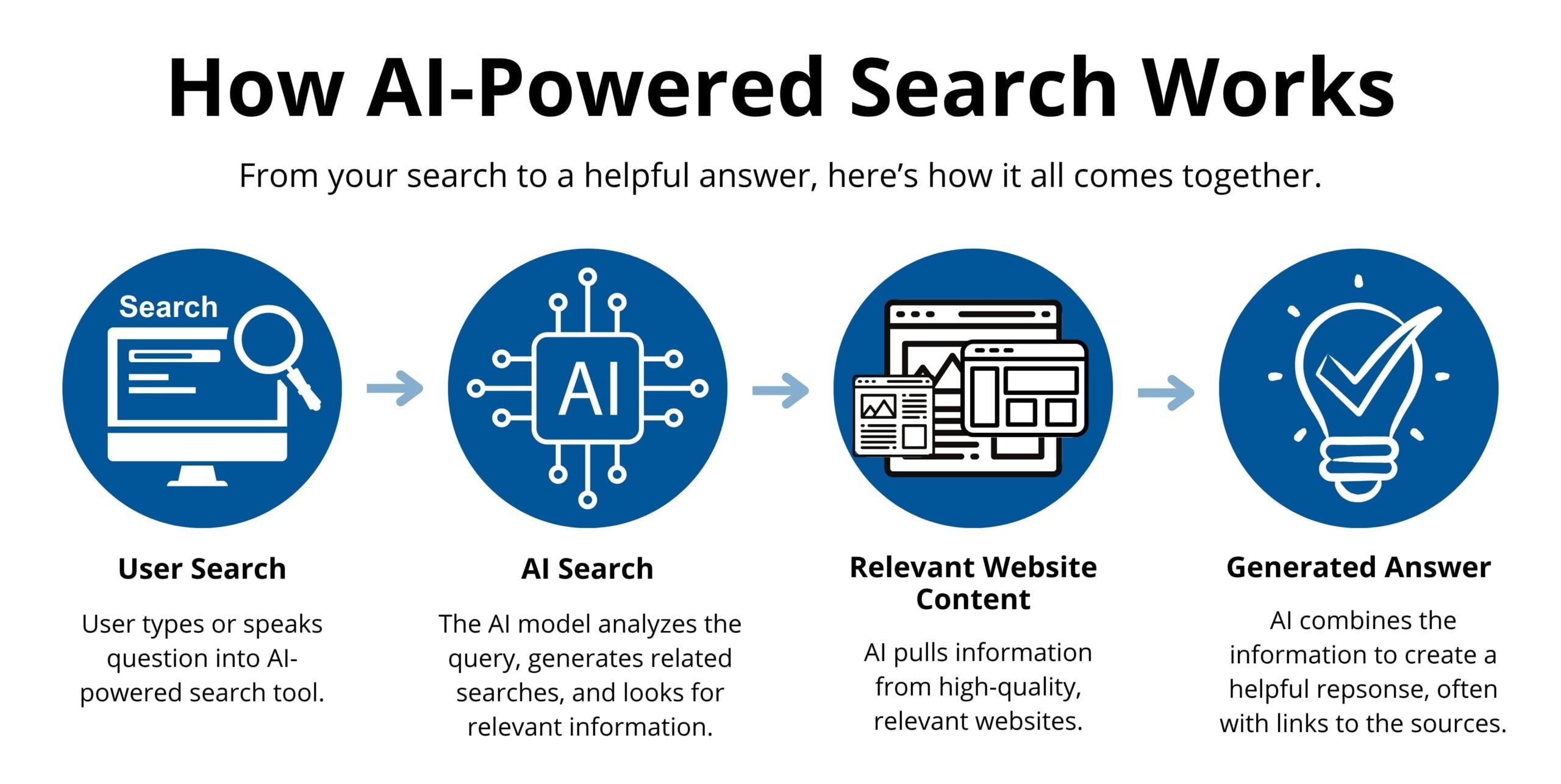
How AI-Powered Search Finds Content
AI-powered search can use several techniques to find and organize information from the web.
Because these systems rely on indexed web content, traditional SEO still plays an important role in AI-powered search visibility.
Do You Need AEO or GEO?
AEO stands for Answer Engine Optimization, while GEO stands for Generative Engine Optimization. These terms are often used to describe strategies for appearing in AI-generated search results.
However, Google’s guidance is that optimizing generative AI search is still SEO. Businesses don’t need special AI markup, separate AI pages, or completely different optimization methods to appear in AI Overviews or AI Mode.
The best approach is to focus on useful content, strong SEO fundamentals, and a website that search engines can easily crawl and understand.
Create Valuable, People-First Content
AI-powered search is designed to surface useful and relevant information, so your content should provide something beyond what is already widely available online. Google recommends creating unique, people-first content that reflects real knowledge or experience.
Your content should also be easy for both users and search engines to understand. Use clear headings, short paragraphs, descriptive page titles, lists when helpful, and direct answers to common customer questions.
Tips include:
Build a Clear Technical Structure
Your technical SEO still determines whether search engines can properly access and understand your content.
Focus on:
Search Console can now report visibility in generative AI features, including AI Overviews and AI Mode.
Use Structured Data Where It Makes Sense
Structured data can help search engines understand specific information about your business, products, services, or content. However, Google says there’s no special schema markup required for generative AI search. Structured data should continue to be used as part of a broader SEO strategy where it is appropriate.
Optimize Local and Ecommerce Information
For local businesses, keep your Google Business Profile accurate and up to date. For ecommerce sites, properly structured product information and Merchant Center data can help products appear across traditional and AI-powered Google Search experiences.
Common Mistakes with AI-Powered Search
How to Measure AI Search Visibility
Google Search Console now includes reporting for generative AI visibility. Businesses can use it to see how their pages appear in AI-powered Search experiences and monitor performance over time.
Depending on the available report, you can review:
AI search will continue to evolve, but the best long-term strategy is still creating useful content on a technically sound website.
Build Content for People First
AI-powered search doesn’t require businesses to abandon traditional SEO or create an entirely new content strategy. Helpful, original content, strong website structure, technical SEO, and accurate business information remain the foundation for visibility in both traditional and AI-powered search.
GM Web Services can help you create and optimize website content that supports traditional SEO while preparing your business for the continued growth of AI-powered search.