GM Web Resources
We are part of a large team made up of designers, developers, marketers, researchers, analysts, and strategists.
Sharing information is essential to what we do.
Have a question?
We’re here whenever you need us.
Custom Website vs. DIY Website Builder for Wilmington Businesses
Not every business needs a fully custom website. The right choice depends on the functionality you need, how important SEO and security are to your business, how much control you want over the design, and how you expect the website to grow over time.
Custom websites are built around the specific needs of a business and may use a content management system (CMS) such as WordPress or be developed with a more customized framework. DIY website builders such as Wix, Squarespace, and GoDaddy offer templates and built-in tools that make it easier to launch a website without extensive technical experience.
DIY website builders can be a good starting point for businesses that need a simple online presence, while custom websites offer greater flexibility for businesses with more specific goals, features, or long-term growth plans.
Custom Website vs. DIY Website Builder: Key Differences
Custom Website
DIY Website Builder
Where DIY Website Builders Can Become Limiting
DIY platforms have continued adding more features, but businesses may run into limitations when they need more advanced functionality or greater control over how those features are implemented.
- Advanced Schema Markup: Some builders generate basic structured data automatically, but custom websites can provide more control over specialized schema.
- Custom Landing Pages: DIY builders can create landing pages, but template and design limitations may make highly customized campaign pages more difficult.
- CRM Integrations: Many DIY platforms support common CRM tools, although more complex or custom integrations may be limited.
- Content & Blog Architecture: Custom websites allow more control over categories, internal linking, URL structure, and content organization.
- Multi-Location Websites: Businesses with several locations may need scalable page templates, location-specific SEO, and structured content that can be more difficult to manage within a basic DIY setup.
These limitations may not matter for a small website, but they can become more noticeable as your marketing strategy and website requirements grow.
Why Individual Service Pages Matter
DIY websites are often launched with a single page that lists all of a business’s services. While that may work for a very small site, businesses with several services can benefit from giving important services their own dedicated pages.
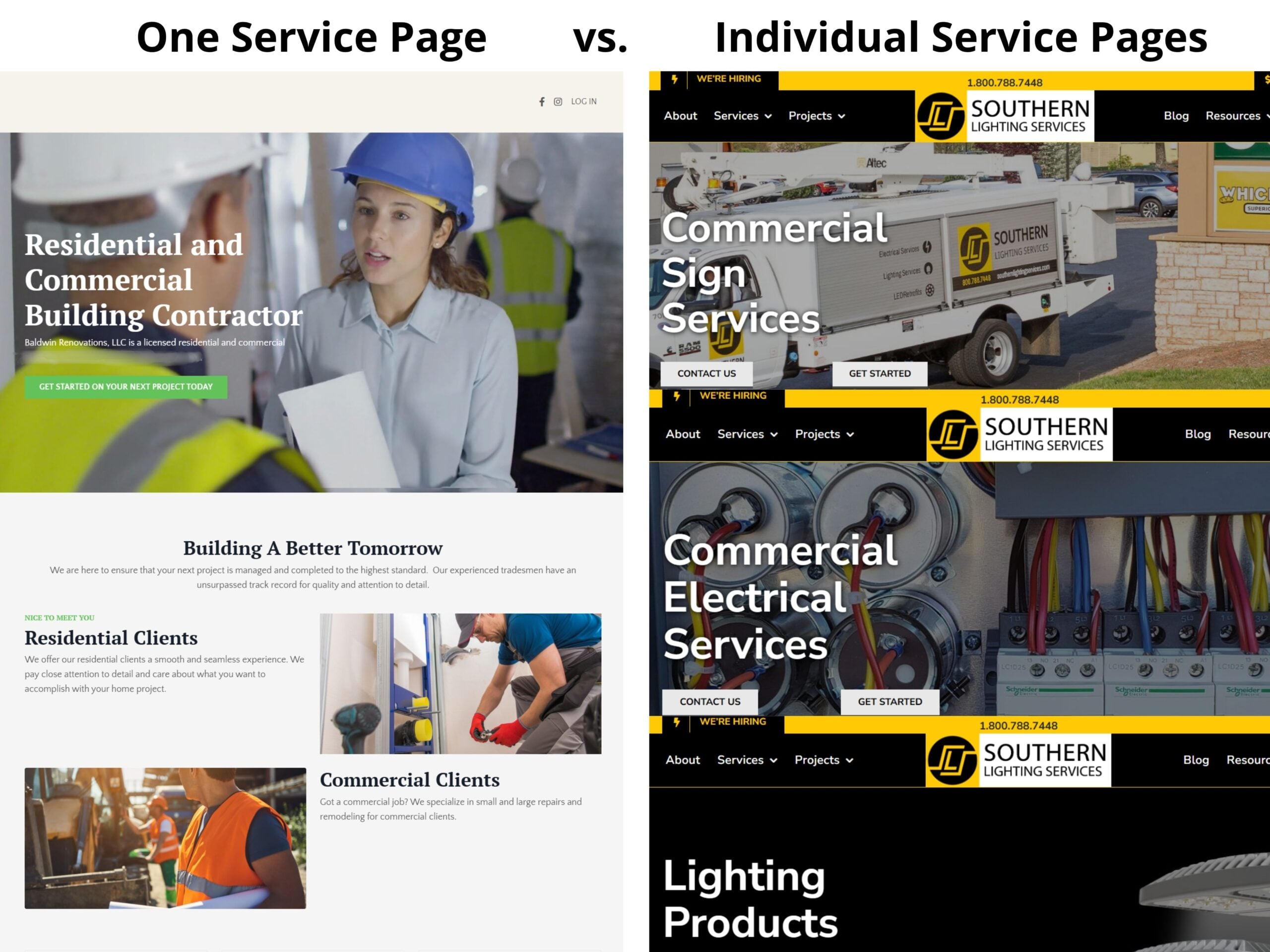
Individual service pages provide more room to explain what you offer, answer customer questions, include relevant calls to action, and optimize the page around a specific search topic. They can also strengthen internal linking and make it easier for visitors to find information about the exact service they need.
For Wilmington businesses, individual service pages can also support a broader local SEO strategy by giving search engines clearer context about both the services you offer and the areas you serve.
Signs You’ve Outgrown Your DIY Website
When a Custom Website May Be the Better Choice
A custom website may make more sense if:
Choose the Website That Fits Your Business
Both DIY website builders and custom websites can be the right choice depending on where your business is today. The most important thing is choosing a platform that supports your current needs without creating unnecessary limitations as your business grows.
If your current DIY website is becoming difficult to manage or no longer supports your goals, GM Web Services can help you evaluate your options and create a custom website built around your business, customers, and long-term growth.